


Description
Saint Philomena and the limits of the historical record
Devotion to Saint Philomena grew after a tomb inscribed with her name was discovered in the Roman Catacomb of Priscilla in 1802. The remains were transferred to Mugnano del Cardinale, where a major shrine developed. Beyond the archaeological inscription and the history of the cult, reliable details of her life and martyrdom are not known. Popular accounts of a young Greek princess and elaborate torments arose later and should be treated as devotional tradition rather than documented biography. Her cult continues, although she is not on the General Roman Calendar.
A youthful figure in prayer
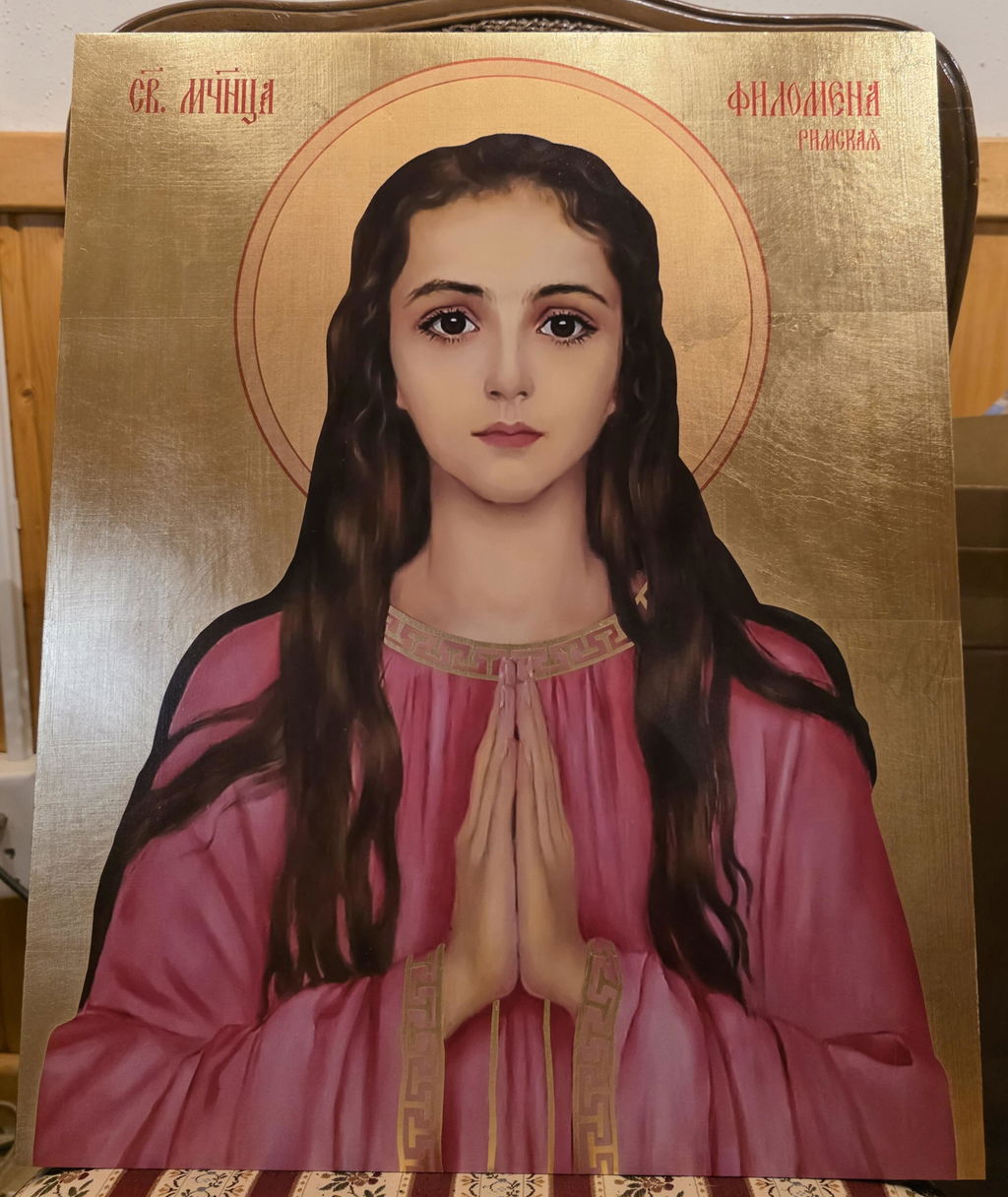
The image shows a young woman in a rose-colored garment with long hair, hands joined in prayer and a halo against the gold-tone field. Unlike many traditional Philomena images, this composition does not display the anchor, arrows, palm or lily commonly associated with her cult. It therefore emphasizes youthful prayer and consecration rather than narrating a particular martyrdom scene. The inscription identifies the subject; the visible attributes alone would not distinguish her from every other young virgin martyr.
Crafted on linden wood in Poland
Made to order in Poland on a double-primed linden wood panel, the image is printed directly onto the prepared surface and finished with decorative gold-tone metal leaf. A certificate recording the year of production and a wall hanger are included. This is a contemporary devotional icon, not an individually hand-painted work.
For prayer with historical honesty
The icon is suited to a home prayer corner, chapel, youth room or shrine connected with Philomena’s devotion. It may accompany prayer for young people, perseverance and purity of intention, without promising protection or healing through the object. A careful devotional use respects both the long-standing affection of the faithful and the limited historical evidence, avoiding unsupported claims about exact events in her life.